
Definition
Acute otitis media (AOM): acute middle ear cleft infection, with effusion and inflammatory symptoms. AAP 2013
AOM with perforation: new discharge through the tympanic membrane; pain commonly improves when the ear starts draining.
Recurrent AOM AAP 2013
Severe AOM: moderate or severe otalgia, pain for at least 48 hours, or temperature of 39 °C or above. AAP 2013
Otitis media with effusion (OME) is distinct from AOM. NICE NG233
Background
Aetiology
AOM usually follows a viral URTI. Eustachian tube dysfunction, immune status and infection contribute.
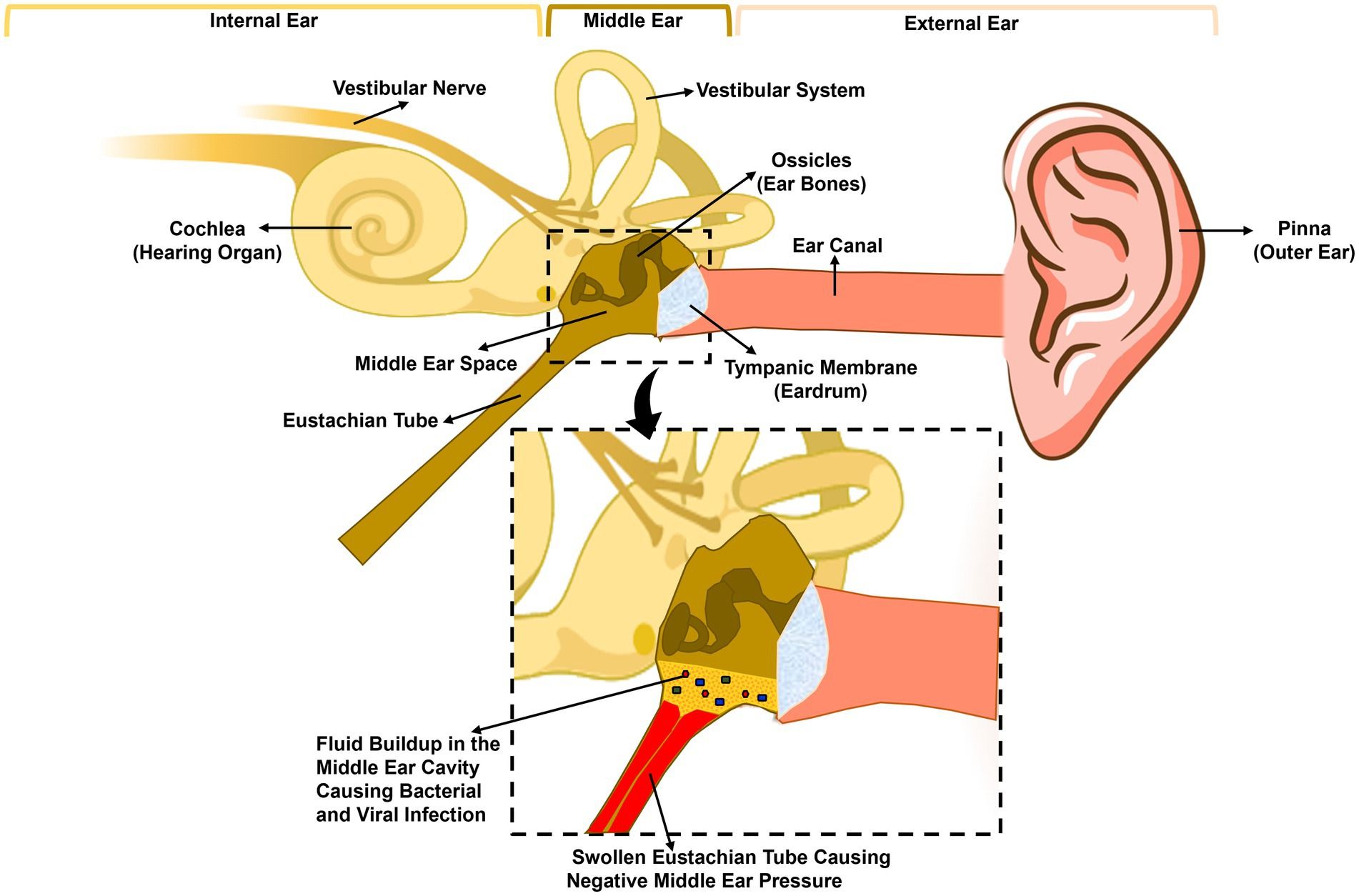
Figure: Eustachian tube swelling after a viral upper respiratory infection produces negative middle ear pressure and an effusion that becomes infected. Ayesha Zahid, Wikimedia Commons, CC BY 4.0.
Coryzal symptoms commonly precede otalgia by 3 to 4 days.
More detail
Inflammation impairs middle ear ventilation and drainage. Children have less mature immunity and a shorter, more horizontal Eustachian tube.
More detail
Rate of progression from URTI: in a prospective study of 294 infants aged 6 months to 3 years, AOM was identified in 22 per cent within 7 days of the onset of a URTI, and a further 7 per cent had signs of middle ear inflammation without meeting AOM criteria.
Bacteria: Streptococcus pneumoniae, Haemophilus influenzae, Moraxella catarrhalis and Streptococcus pyogenes.
Viruses: RSV, rhinovirus, adenovirus, influenza and parainfluenza; viral and bacterial infection may coexist.
More detail
Intracranial suppuration may involve the Streptococcus anginosus group (historically S. milleri).
Epidemiology and risk factors
AOM predominantly affects children, with peak incidence at 6 to 12 months; adults are affected less often. Kaur 2017
More detail
Counting the burden: incidence figures drawn only from healthcare presentations understate the true burden, because a large share of episodes is managed at home and never reaches a clinician. Parent-reported surveys give higher rates than consultation data.
Host: young age, family history, Down syndrome, cleft palate/craniofacial abnormality, immunodeficiency, primary ciliary dyskinesia and cystic fibrosis.
More detail
Common age range: 3 months to 3 years. Male sex is a weak association; reflux has been proposed but its role is uncertain.
Down syndrome, cleft palate and primary ciliary dyskinesia also warrant attention to persistent effusion and hearing; recurrent acute infections and OME need separate assessment.
Environment: nursery attendance, overcrowding, socioeconomic deprivation, tobacco smoke, bottle feeding and dummy use. Breastfeeding is protective.
More detail
In a prospective cohort of 615 children, 23% had experienced AOM by age 1 and 60% by age 3. Kaur 2017